

Most of us baby boomers didn’t grow up in a world that handed out usernames and passwords, at least not until we were in our twenties. You built your life with grit, handshakes, and showing up. Somewhere along the way, technology took the wheel, and now it feels like everyone’s speaking a language that wasn’t even invented when you started working.
You scroll and see people half your age making money online doing things that don’t even look like work, and it’s easy to think you missed your chance. You didn’t. You’re right on time.
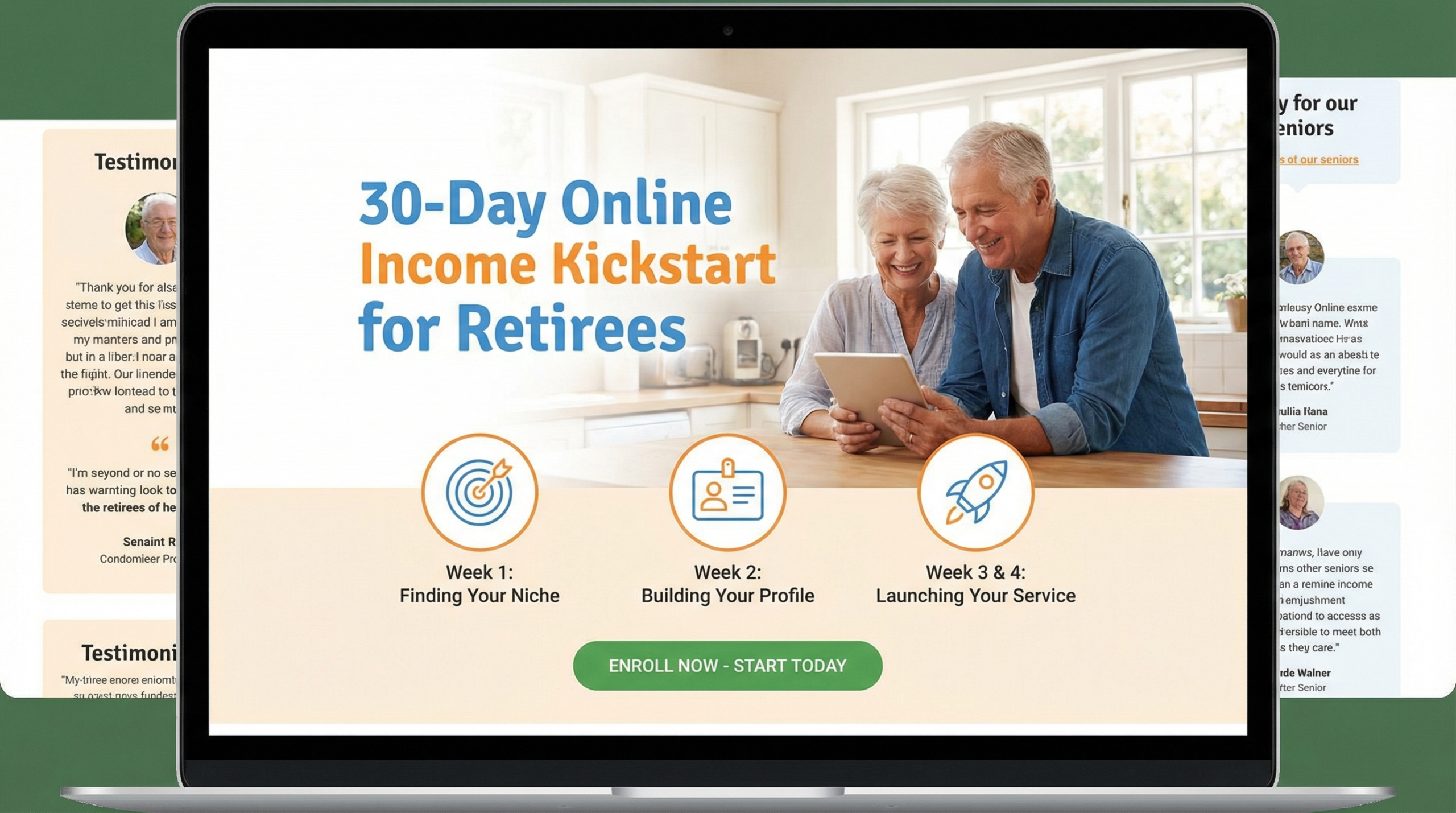
A clear, step-by-step 30-day plan that helps retirees build an online income from scratch — no tech skills, no investment, just your experience and consistency.
What You’ll Do
- Flip your mindset: Move from spectator to online creator.
- Choose your role: Affiliate marketer or product creator — your choice.
- Pick a platform: Find a space that feels natural to you.
- Research demand: Learn what people actually want before creating.
- Create and share: Post content, tools, and products with real value.
- Build trust: Your lifetime of experience becomes your advantage online.
“You don’t need a website or budget. You just need to show up, be consistent, and share your experience.”Read the Full 30-Day Kickstart Plan
Start simple and grow from there — success online doesn’t begin with perfection, it begins with action.
This isn’t about chasing kids on TikTok or learning to dance for clicks. It’s about turning your lifetime of experience into something that pays you back — on your terms. You’ve already got the one thing most people online don’t: perspective.
You know what people struggle with, what makes them buy, what makes them stay. You’ve seen how hard work adds up, even if it’s slow. Now the goal isn’t to start over — it’s to start smart.
Over the next 30 days, you’ll build a foundation that doesn’t require tech skills or a budget. You’ll learn how to set up something simple and real — ignite an online income stream that grows from your own voice, curiosity, and consistency.
Some days will stretch your comfort zone. You’ll be trying new tools, writing short bits of content, or putting yourself out there in ways you haven’t before. But everything will be clear and doable, step by step.
You won’t need to buy a course or hire anyone. You won’t be told to “scale” or “funnel” anything. You’ll learn what affiliate marketing actually means — and how to earn without selling your soul.
You’ll discover how people create products, even little printable ones, and how you can too. You’ll learn to set up your digital corner of the world without spending a dime, and to think like a business owner who values time, energy, and freedom more than money.
This is your restart. Not because you failed, but because you finally get to create something that fits who you are today. Thirty days from now, you’ll understand what’s possible and exactly how to keep it growing. You don’t need to be tech-savvy. You just need to show up. And that’s one skill you already mastered a long time ago.
Day 1 – The Switch You Didn’t Know You Could Flip
For years, you’ve been told that online income is complicated — that you need an expensive website, fancy programs, or followers before you can earn a dime. That idea has kept a lot of good people sitting on the sidelines.
The truth is, online income isn’t about tools. It’s about understanding value. If you can learn to share or recommend something that helps someone else, you can earn money from it. Today’s goal isn’t to sell or build anything. It’s to flip that mental switch from “spectator” to “participant.”
Online business isn’t a different world. It’s the same one you’ve lived in, just moved onto screens. You’ve always known what makes people trust, what makes them buy, and what makes them come back.
The difference now is that the handshake happens through words, not skin. You can still be real. You can still build relationships — and they can still pay you. Your first action step is simple but powerful: decide your role.
Are you more comfortable sharing other people’s products you like (affiliate marketer) or creating your own (digital product creator)? You don’t have to know for sure yet — just lean toward what excites you more.
And remember, you can have more than one income stream in this industry – this is just your starter role. Write it down. Then open a notebook or document and label it “My 30-Day Kickstart Journal.”
This will be your home base — where you track ideas, write notes, and keep every step clear. That little file or notebook is the first seed of your business. That’s it for today. You’re officially no longer just watching other people make it happen. You’re in motion.
Day 2 – The Skill You Forgot Was Marketable
Most retirees think they don’t have the kind of skills that fit into an online business. They picture coders, influencers, or tech experts. But the truth is, the internet runs on the same human problems you’ve spent a lifetime solving — communication, reliability, encouragement, creativity, and real-world know-how. The difference is, now you get to package those things instead of just giving them away.
Today, your job is to identify what you already know that could help someone else. Think back on your work life, your hobbies, and the things people always came to you for advice about.
It might be how to stay organized, how to cook for one, how to save money, how to garden smarter, or how to handle stress. Anything that makes life easier or better for someone else can be turned into value online.
Action step: Write down three areas you know something about — big or small.
Then, beside each one, jot a few ways someone could benefit from that knowledge. For example, if you love gardening, you could recommend tools through affiliate links or create printable planting charts.
If you know how to stretch a dollar, you could make simple guides or mini eBooks about budget tips. Don’t worry about choosing yet. Just list your possibilities. You’re not starting from nothing — you’re starting from enough.
Day 3 – The Corner of the Internet That Feels Like Home
Every business needs a place to exist, but yours doesn’t need to cost a penny. You don’t need a website right now. You just need a space where you can learn to share what you know and connect with others.
That might be a Facebook profile, a YouTube channel, a simple blog, a forum, or even an email list later on. The point is to pick one online “corner” that feels natural to you — somewhere you can start speaking and learning in public, without fear of doing it wrong.
Pick the platform that matches your comfort zone. If you like to write, a blog or Facebook page works fine. If you’d rather talk than type, YouTube or TikTok can be surprisingly easy. You don’t need to show your face if you don’t want to. You can narrate, share your screen, or post images.
Action step: Create your free space today.
Name it in a way that tells people instantly what they’ll gain — something topic-specific, not personal. For example, instead of Simple Living with Carol, call it Budget Meals for One or Container Garden Starter.
Think about the topic you listed yesterday and choose a name that matches what your audience is looking for, not who you are. Don’t aim for clever — aim for clear. This is the seed of your brand and your first piece of online real estate.
Day 4 – The Easiest Way to Know What People Actually Want
You don’t need a marketing degree to figure out what sells. The simplest way to know what people want is to look at what they’re already buying, asking, or sharing. Most beginners waste months guessing. You’ll skip that step by learning to listen first, create second.
Go to places where your topic lives — Amazon, Etsy, YouTube, or even Facebook groups. Type in a few words related to the ideas you wrote down earlier. Read product titles, watch video topics, and scan comments.
You’ll start to notice patterns. The same questions come up again and again. The same problems get talked about. That’s demand. And demand is where income begins. You’ll also notice there’s room for voices that explain things more clearly, or more kindly, or with real experience.
That’s where you come in. You don’t need to be the first to teach something — you just need to be the one who teaches it in a way people finally understand.
Action step: Pick one place to research today — just one.
Spend 20 minutes reading or watching content around your topic. Write down three recurring problems or questions you see. Those three things will become your goldmine for products, posts, or affiliate ideas. You’ll never need to guess again — you’ll know exactly what people care about.
Day 5 – Your Simple Way to Stand Out Without Trying
A lot of new online business owners worry about being “different.” They look at crowded niches and think, “It’s all been done.” It hasn’t. The easiest way to stand out isn’t to be outrageous or clever — it’s to be real. People crave voices that sound human, especially those of people with life experience.
Your strength is your clarity. You’ve lived long enough to skip the fluff and get straight to the point. Younger creators try to sound impressive. You just need to be honest. You don’t need filters or buzzwords. You just need to say things the way you’d explain them to a friend.
Action step: Write your “why” in your Kickstart Journal.
One paragraph. Why do you want an online income? Maybe you want breathing room in your budget. Maybe you want to help your family, or simply prove to yourself you can do something new.
Whatever it is, write it down. That’s your compass. When you know your reason, every word you write, product you make, or link you share will have purpose — and that’s what makes people pay attention.
Day 6 – The Earning Model Hiding in Plain Sight
By now, you’ve seen that earning online isn’t about being flashy. It’s about connecting what people want with something that helps them.
There are two simple ways to do that:
- recommend
- or create.
Recommending is affiliate marketing. Creating is product selling. The beauty of this system is that both can work together, and neither needs upfront money.
Affiliate marketing means sharing a product someone else created and earning a commission when your link drives a sale. You don’t handle payments, shipping, or customer support.
You just connect the dots. Selling your own product can be as easy as creating a short guide, a printable, or a checklist. You keep all the profits, but you’ll need to handle delivery. The good news is that both options can be free to start, and you’ll learn how to do each one before these 30 days are over.
Action step: In your Kickstart Journal, make two columns — one labeled “Recommend” and one labeled “Create.”
Under each, list a few ideas that match your interests. Maybe “recommend” includes budget cookbooks or garden tools, while “create” includes a simple printable meal planner or senior fitness tracker. You’ll soon start to see where your energy naturally leans.
💻 Ready to start earning online the right way?
Wealthy Affiliate gives you step-by-step training, website tools, and real support — even if you’ve never built a site before. You can start free, learn at your own pace, and grow when you’re ready.
👉 Create your free starter account and begin today
Day 7 – The Invisible Currency You Already Own
There’s one thing that fuels every successful online business, and it isn’t money. It’s trust. People buy from voices that make them feel safe, understood, and seen. You’ve been earning trust your whole life — as a coworker, friend, parent, or mentor. The only shift now is learning how to build it through words on a screen.
When you post online, don’t aim to sound like a salesperson. Imagine you’re sitting at a table with someone who just asked your advice. You’re not pitching — you’re helping. That energy translates online and draws people in naturally. You don’t have to be polished or perfect. You just have to be real and consistent.
Action step: Go to your chosen platform and write your first short piece.
Keep it under 200 words. Introduce your topic and why you care about it. Something like: “I started sharing my favorite budget-friendly recipes because I know how tight things can feel lately.” Post it. No hashtags or overthinking. Just begin. Your first real moment online as a creator has officially happened — and it’s built on trust, not tactics.
Day 8 – The Simple Way to Know Who You’re Talking To
Every successful business begins with one clear picture in mind — the person you’re helping. Online, this person is often called your audience or niche, but don’t let that word scare you.
It just means a specific group of people who share a common goal or struggle. The tighter you define who they are, the easier it becomes to create content and products they’ll love.
Start by thinking of one person who would truly benefit from what you plan to share. Maybe it’s a retiree trying to supplement their income. Maybe it’s a busy mom learning to cook cheap, healthy meals.
Or someone dealing with health changes who needs small daily wins. When you talk to one person, your message feels more personal — and people feel like you’re speaking directly to them.
Action step: Write one paragraph describing your ideal person.
Give them a name, age range, and a few life details.
- What frustrates them?
- What do they want to learn or fix?
- What do they wish existed to make life easier?
Keep this description at the top of your Kickstart Journal.
Every time you write or create something, imagine you’re talking to that one person. It’ll keep your work clear and heartfelt.
Day 9 – The Listening Post You Didn’t Know You Needed
Most new online earners think progress happens when they talk more. The truth is, it happens when they listen better. You already built a small space and posted something personal. Now it’s time to treat that space like a listening post — a way to learn what people care about most before you create more.
You don’t need analytics tools or fancy dashboards. You just need to watch what gets reactions, comments, or questions. When people respond, they’re voting with their attention.
If something you share sparks conversation, that’s a sign of demand. If it gets quiet, that’s feedback too — it means you need to shift topics or clarify.
The smartest online entrepreneurs treat every post as a small experiment.
Action step: Review anything you’ve posted so far — or browse through other creators in your topic area.
Look at which ideas get people talking or asking for more. Write down three observations:
- one thing that got your attention,
- one that didn’t, and one you could improve.
These notes will become your compass. You’ll never have to guess what your audience wants again — they’ll tell you, if you listen.
Day 10 – The Bridge Between What You Know and What They Need
At this point, you’ve figured out what you know and who you want to help. Now it’s time to connect the two. This bridge is built through clarity — taking what feels familiar to you and translating it into simple, helpful language for others.
You may know how to stretch a grocery budget or start seeds in a container, but the people you’ll help often don’t know where to start. Your job is to make that first step obvious.
Don’t think like a teacher standing at a chalkboard. Think like a neighbor leaning over the fence, saying, “Here’s how I do it.” People connect with you when you make things feel doable, not distant. The smaller and simpler your explanations, the more powerful they are.
Action step: Choose one small thing you could teach from your topic.
Write it out in 3–5 clear sentences, as if you were texting a friend. You don’t have to post it yet. You’re building your bridge — turning your experience into clear, bite-sized help that’s easy for others to cross.
Day 11 – The Free Tool That Turns Effort into Income
You don’t need expensive software to make money online. There are free tools that handle everything from tracking affiliate links to creating and sharing digital products.
The trick is to start with one tool, learn it well, and use it to simplify — not complicate — your process. Most people waste energy jumping between platforms. You’ll learn to make one tool do the work of five.
If you’re focusing on affiliate marketing, tools like Bitly or TinyURL can track clicks and shorten long links. If you’re leaning toward product creation, sites like Wealthy Affiliate Image Studio and Canva let you design printables, checklists, or short PDFs with drag-and-drop ease. The key is to start with something that saves time or makes your idea look professional — without costing you anything.
Action step: Pick one free tool that supports what you’re building.
Create an account and spend 15 minutes exploring how it works. Watch a short YouTube tutorial if needed. You don’t need to master it — you just need to get comfortable enough to use it. Every click you take today moves you closer from “trying” to “doing.”
Day 12 – The Offer Hidden in Everyday Conversations
If you’ve ever told a friend about a product you love — a kitchen gadget, book, or vitamin that made life easier — you’ve already practiced affiliate marketing. The only difference online is that you get paid for doing it.
The power of recommendation is something you already understand. The trick is to learn how to frame that recommendation so people see it as help, not a sales pitch. Start paying attention to the things you already use, enjoy, or talk about.
Ask yourself which ones relate to the topic you’re building around. If you’re helping people cook on a budget, that might include:
- tools,
- storage containers,
- or ingredient guides.
If you’re in the wellness space,
- maybe it’s supplements,
- fitness gear,
- or relaxation aids.
Every product that makes life simpler for your audience could be part of your offer mix.

Action step: Write down three products or resources you’ve genuinely used or would feel good recommending.
Next to each, note where someone could find it — Amazon, Etsy, or the brand’s website.
You’ll later learn how to sign up for affiliate programs, but today is about recognizing what you already promote naturally. You don’t have to “sell” when you believe in what you’re sharing.
Day 13 – The Free Storefront You Can Open in an Afternoon
You don’t need a website or storefront to share affiliate products or digital items. There are free ways to showcase what you offer, even if you never buy a domain. The idea is to make it easy for people to find everything you recommend or create, all in one place.
Think of this as your “digital shelf.”
You can set it up using a simple tool like
- Linktree,
- or a free site builder such as
- Google Sites
- or Notion.
If you’re on social media, the link in your bio on social media can point there.
It’s your hub — the one link you’ll use everywhere. Later, you can expand it into a full site, but for now, this gives you a clean, professional way to organize what you share. Someday you’ll want your own domain because you’ll have full control over it, and you can easily set it up with WordPress.
Action step: Pick one free hub tool — Linktree is the simplest — and create your digital shelf.
Add one placeholder link for now, even if it’s just a test. You’ll fill it in later with your affiliate links or products. That one link becomes your online business card — a single spot that makes your effort look polished from day one.
Day 14 – The Shortcut to Finding Affiliate Programs That Accept Beginners
Many retirees assume affiliate programs are only for big influencers or tech-savvy marketers, but thousands of companies welcome beginners — especially those who focus on real, honest recommendations. You don’t need to beg to be accepted or pay a dime. You just need to know where to look and how to apply confidently.
Amazon Associates is the easiest place to start, but it’s not your only option. ShareASale, ClickBank, and Impact Radius all have beginner-friendly products across every topic imaginable — from cooking and home projects to finance and wellness.
Most programs will approve you instantly if you have even a small online space set up. What matters most is that your online presence looks real, not fancy.
Action step: Visit two affiliate networks — start with Amazon Associates and ShareASale. Create your free accounts.
Browse their categories and note three products that fit your niche. You don’t need to promote them yet. This step is about seeing how affiliate programs work and realizing just how many options you have waiting.
Day 15 – The Product You Can Make in a Weekend
The idea of “creating a product” sounds huge until you realize it can start as something small, like
- a printable checklist
- or a short how-to guide.
You don’t need to be a designer or a writer — you just need to package one helpful piece of information in a format people can download and use. That’s it. People pay for clarity and convenience.
If your topic is home gardening, your product might be
- a planting calendar
- or seed-starting chart.
If it’s budgeting,
- maybe a spending tracker
- or grocery list planner.
If you enjoy cooking,
- a one-page “meal-for-two” recipe sheet could work beautifully.
The value is in saving people time and helping them feel more organized or capable.
🌱 No tech skills? No problem.
Wealthy Affiliate teaches you how to build an online income using simple lessons, built-in tools, and a helpful community. Perfect for retirees who want guidance without pressure or hype.
👉 Start free and follow the training step-by-step
Action step: Choose one small idea that solves a common problem in your niche.
Open Wealthy Affiliate Image Studio or Canva and use a template – or use Google Docs and sketch it out — title at the top, steps or checkboxes below. Don’t worry about perfection. By the end of today, you’ll have your first draft of a digital product — a real asset that can earn for you while you sleep.
Day 16 – The Quiet Art of Naming What Sells
A good title can double your sales before you ever touch design or marketing.
People buy because they instantly see themselves in what you’re offering. That means your title needs to speak to a problem or a goal — not cleverness. A printable called Budget Tracker sounds dry. One called Stop the Overspending Spiral makes someone feel understood before they even click.
When you name a product or post, think like your audience. They don’t type “meal planner” into a search bar because they love spreadsheets. They type it because they’re tired of wasting food or not knowing what’s for dinner. That emotion is what your title should touch. You’re not labeling a file — you’re starting a conversation in their head.
Action step: Look at the product or idea you started yesterday.
Write five possible titles for it. Each one should use a word that stirs a feeling or relief
- “finally,”
- “simple,”
- “stress-free,”
- “done-for-you.”
Read them out loud. The one that makes you nod instead of cringe is your winner. Save it at the top of your document. That title is your first silent salesman.
Day 17 – The Beauty of Borrowed Traffic
You don’t have to build an audience from scratch to start earning. You can borrow existing traffic by placing your content or links where people already gather. This is one of the smartest moves for beginners with no following and no budget. You’re not stealing attention — you’re joining conversations where people are already looking for answers.
- This could mean posting your helpful tip in a Facebook group that allows value posts (not spam),
- answering a relevant question on Quora or Reddit,
- or contributing a short guest tip in someone’s comments.
Each time you do, people notice your name or profile link — and curiosity does the rest.
Action step: Find one community, group, or channel related to your topic.
Spend ten minutes reading how people interact there.
Then, contribute once
- share a quick tip,
- answer,
- or encouragement without linking anything.
- Just be useful.
You’re laying groundwork. When you do add a link later, people will already trust that you’re there to help, not hustle.
Day 18 – The Link That Pays You Back
You’ve picked your affiliate programs and maybe even drafted your first product. Now it’s time to understand how the link itself works — because that link is your paycheck. Every affiliate program gives you a special tracking link that identifies you as the person who referred a sale. When someone clicks and buys through your link, you earn a commission automatically. No chasing payments or invoices. It’s hands-off once it’s set up.
The key is knowing where to use that link without looking like a walking advertisement.
Place it where it feels natural:
- in a short tip post,
- a resource section on your Linktree,
- or a sentence that says, “Here’s what I use to make this easier.”
You’re not tricking anyone. You’re helping them make a good choice faster. The best earners are the ones who treat their audience’s trust like gold.
Action step: Go to one of your affiliate dashboards and copy a product link that fits what you’ve been building.
- Paste it into a simple document labeled Affiliate Links Master List.
- Write what the product is and where it fits your audience.
- Keep it organized.
That single file will become the financial backbone of your online setup.
Day 19 – The Free Way to Build Your List While You Sleep
Most online earners eventually realize the real power isn’t in one-time clicks — it’s in collecting an audience they can reach anytime. That’s where an email list comes in. You don’t need a website or fancy software to start one.
- Free services like ConvertKit,
- MailerLite,
- or Substack lets you build a list of subscribers who want to hear from you.
When you share something new — a tip, product, or affiliate recommendation — you’ll have a ready-made audience waiting.
Think of your list as a small community of people who’ve said, “I like your style. Keep me in the loop.” It’s not about blasting promotions. It’s about building relationships through small, honest messages that feel like they’re written one-to-one.
Action step: Pick one free email tool and create your account.
Then write your first short welcome message — three sentences about what subscribers can expect, like weekly tips or useful finds. You don’t need to send it yet. You’re setting up the system that turns followers into loyal buyers — automatically and without extra hours.
Day 20 – The Secret Ingredient Behind Every Click
You can post, share, and recommend all day long, but there’s one invisible element that turns attention into income — clarity of why. People click when they know what’s in it for them, not what’s in it for you. That means every post, product, or email needs to show one clear benefit up front.
- If it saves time, say that.
- If it saves money, say that.
- If it makes life easier, say that.
Online success is built on clear benefits, not clever language. You don’t have to sound like a salesperson. You just have to connect what you’re sharing to a feeling of relief or improvement. That’s what makes people take action.
Action step: Go back to one thing you shared — maybe a post, tip, or product idea.
Rewrite the main sentence or headline so it answers the question “Why does this matter?”
- Example: change “Printable Grocery List”
- to “The List That Cuts 20 Minutes Off Every Store Trip.”
Keep that phrasing habit for everything you create from now on. It’s a small mental shift that turns browsers into buyers.
Day 21 – The Free Traffic Engine That Never Sleeps
Once you’ve posted a few pieces of content and created your small hub, it’s time to let the internet work for you. Evergreen content — posts, videos, or guides that stay useful over time — can quietly bring new people to you long after you hit publish. Think of it like planting digital seeds.
- Platforms like Pinterest,
- YouTube,
- and blogs are great for this because their content doesn’t disappear in a day.
It gets searched, saved, and shared for months or even years. You don’t have to chase trends or algorithms. You just need to create something helpful once and let time multiply the reach.
Action step: Choose one piece of evergreen content you could make based on your niche — a “how to” video, a short blog post, or a simple tip graphic for Pinterest.
Create it and post it once. Then note where it lives. This single piece can quietly pull in views, clicks, and income even while you’re away — your first taste of true passive potential.
Day 22 – The Gentle Way to Ask for the Sale
Many beginners freeze when it’s time to actually ask people to buy. They don’t want to feel pushy.
The truth is,
- selling online isn’t about pressure.
- It’s about
- timing
- and tone.
You’ve already built trust and shared value. Now you simply need to connect the dots — to show people how your product or recommendation solves what they’ve been struggling with.
When you frame your offer as help, not persuasion, it feels natural.
You can write something like,
- “If you’ve been trying to get organized, this printable I made might help,”
- or “Here’s the budget planner I use to stay on track.”
You’re not convincing anyone — you’re offering relief. The right people will lean in.
Action step: Write one short “invitation post” — two or three sentences that mention your product or affiliate link.
Make sure it sounds conversational, not scripted. You can post it publicly or just save it for now. The goal isn’t to get a sale today. It’s to get comfortable talking about what you offer without apology. That confidence is what builds buyers over time.
Day 23 – The Customer Who Hasn’t Met You Yet
When you’re just starting out, it’s easy to feel invisible — like you’re talking to an empty room. But remember, most online buyers don’t meet a creator once and buy immediately.
They notice you, forget you, see you again, and slowly grow familiar. That’s why consistency matters more than speed. Every post, comment, or email is another gentle introduction to someone new.
You’re building recognition through repetition. You don’t need hundreds of posts — you just need to keep showing up in ways that feel authentic. When someone finally needs what you offer, you’ll already be in their mind because they’ve seen your name, your tips, your steady presence. That’s how strangers turn into customers.
Action step: Choose one simple habit to build visibility this week — maybe posting one tip daily, commenting on one related post a day, or sending a short weekly email.
Small, repeated effort wins in the long run. Set a reminder and stick with it for seven days. You’ll start to feel that quiet shift from “unknown” to “noticed.”
Day 24 – The Power of Showing, Not Telling
Most people online talk about what they do. The ones who grow fastest show it. When you demonstrate value rather than describe it, you become memorable. If you’re teaching meal planning, show a quick before-and-after of your grocery list.
If you’re in the gardening niche, share a picture of your sprouting seeds beside your printable chart. When people see your methods working in real life, they naturally want to know how to do it too.
You don’t need to reveal your personal life. Just share small proof moments that say, “This works.” You’re giving your audience a glimpse of possibility — their own.
Every visual or mini result you show builds credibility faster than any fancy bio or long explanation ever could.
Action step: Create one small “proof post” today.
- Snap a photo,
- record a quick clip,
- or design a before-and-after image in Wealthy Affiliate Image Studio or Canva.
- Caption it with a short note about what you learned or achieved.
- Keep it honest, not polished.
People remember real progress more than perfection — and it makes them trust your advice even more.
Day 25 – The Simple System That Saves Your Sanity
By now, you’ve built a lot:
- posts,
- products,
- links,
- and maybe even an email list.
The next step is organizing it all so it doesn’t feel overwhelming. You don’t need software for that — just a clear system. Think of it like keeping all your garden tools in one shed instead of scattered across the yard.
Create folders on your computer or in Google Drive for each category:
- “Affiliate Links,”
- “Products,”
- “Images,”
- and “Content Ideas.”
Inside your notebook or journal, start tracking what you’ve posted and where. This makes it easy to update links, reuse posts, and stay consistent without feeling lost.
Action step: Spend 30 minutes organizing what you’ve created so far.
- Label files clearly,
- delete duplicates,
- and store your most-used materials in one easy-to-find folder.
You’ll instantly feel lighter. A tidy system isn’t just about order — it’s about making sure your effort adds up instead of disappearing into digital clutter.
Day 26 – The Rhythm That Builds Real Results
Online income doesn’t come from one lucky post or product — it comes from rhythm. The people who earn steadily aren’t faster or smarter. They just build habits around small, repeatable actions. Consistency compounds like interest in a savings account. Miss a day, and nothing breaks. Stick with it, and things start to click almost automatically.
You don’t need a strict schedule. You need a flow that fits your energy. Maybe mornings are when your ideas come easiest, or maybe you work better after dinner. The key is to give your business a predictable heartbeat. When you treat it like something worth showing up for, results follow naturally.
Action step: Create your personal rhythm plan.
Write down how many days a week you can commit to working on your online business and what you’ll do on those days:
- one day for content,
- one for product updates,
- one for research.
Keep it simple and sustainable. You’re not building a job. You’re building freedom that runs on consistency, not pressure.
Day 27 – The Fear of “Who Am I to Teach?”
Almost everyone hesitates to post or sell because they think they’re not an expert. But the truth is, online audiences don’t want professors. They want guides who are just a few steps ahead of them. You don’t need credentials — you need clarity and kindness. That’s what builds loyalty.
When you share what’s working for you or explain something you just learned, people feel seen. They relate. They trust you more because you’re learning with them, not lecturing from above. Every tip you post can come from your own trial and error. That’s what makes your content genuine. It’s like “been there, done that.” I can help.
Action step: Write one small teaching post today.
Start with something you figured out during this 30-day process:
- maybe how you organized your files
- or found your first affiliate product.
- End it with one sentence of encouragement for someone just starting.
You’ll be surprised how many people see themselves in your words and begin to follow your lead.
Day 28 – The Mini Launch That Builds Confidence
You don’t need a big audience to “launch” something.
In fact, your first mini launch is just about testing your process and seeing what happens when you ask for a small action:
- a click,
- a download,
- a signup,
- or a sale.
It’s practice, not pressure. The point isn’t to make a fortune overnight. It’s to prove to yourself that your system works, that people respond, and that you can follow through.
Start small. Post a message or send an email sharing your product, printable, or affiliate link. Keep your tone helpful, not hype-driven. Say, “I made this to help with [problem]. Here’s where you can grab it.” That’s all it takes. Whether one person or ten responds, you’ll learn what part of your message connects — and what you can improve next time.
Action step: Do a soft share of your offer today.
Post, message, or email your small audience. Track who clicks or comments. Celebrate every interaction — even the smallest one. This is your first launch, and every bit of feedback is proof that your online business is alive and growing.
Day 29 – The Review That Doubles Your Progress
Most people rush from one idea to the next without stopping to see what worked. The fastest way to improve — and double your results — is to pause and reflect. A five-minute review can save you weeks of wasted effort.
Look back at the past four weeks.
- What felt natural?
- What drained you?
- Which posts or products got attention?
You’ll start to see patterns: what your audience loves, what you enjoy, and what doesn’t fit. This reflection turns random activity into a system that works for you.
Action step: Open your Kickstart Journal and make three lists: “Wins,” “Lessons,” and “Next Steps.”
- Under Wins, note every small success —
- a finished product,
- a post you liked,
- a comment you received.
- Under Lessons, jot
- what didn’t work
- or felt confusing.
- Under Next Steps, write what you’ll focus on next month.
That reflection turns effort into wisdom — your most valuable business asset.
Day 30 – The Foundation You Can Keep Building On
You’ve made it to the final day, and that alone puts you ahead of most who start and stop. You’ve built something real — not just a list of tasks, but the bones of a small online business that can grow with you.
You know how to pick a topic, find what people want, create something useful, and share it in ways that feel authentic. From here on, it’s not about doing more. It’s about deepening what you’ve already started.
You don’t need to chase every new idea that crosses your feed. You just need to keep improving one thing at a time:
- one post,
- one product,
- one connection.
The beauty of online income is its flexibility. You can work when you want, grow at your own pace, and shape your business around your life instead of the other way around.
Action step: Write a short letter to yourself in your Kickstart Journal.
Begin with, “Here’s what I’ve built so far,” and list what you’ve accomplished:
- your online space,
- your ideas,
- your products,
- your confidence.
- hen write one goal for the next 30 days.
Not a dream — a direction. Something you can actually do. This closes your Kickstart but opens the door to your next level.
The Second Act You Were Always Meant to Have
You didn’t just finish a 30-day challenge. You built a foundation that can change how you see yourself. For years, you might have thought your working chapter was behind you.
But this new chapter — one where you build income from your own ideas and experience — is just beginning. You’ve proven you can learn new tools, adapt to change, and stay steady through every small step. That persistence is your greatest advantage.
The world often underestimates older generations in business, assuming they’re too late to start. What they forget is that you’ve already done the hard parts — showing up, solving problems, and building trust.
Those skills don’t expire. They’re the backbone of every successful online entrepreneur. You simply needed a new format to use them in. The next time you doubt yourself, remember this: you built something from nothing using time, focus, and grit — not money or shortcuts.
You now have an income path that can grow as you do. You can turn what you know into value for others, create products that help, and build freedom on your own terms. This isn’t a dream. It’s your second act, and it’s well underway.
What’s your take on this? Do you have tips, tools, or stories that could help fellow Senior Marketers? Drop a comment below—your insight might be precisely what someone else needs. I read every comment and reply when I can. Let’s learn from each other.